A Family Story Map
Most family histories end up as a document nobody opens: a memoir in a drawer, a tree of names and dates, a box of photographs whose places nobody can any longer point to. We turn that material into a living interactive map — a pin for every town, street and house the family lived in, fled from, married in or is buried in, each with the photograph and the story that belongs to it. The whole journey can be drawn as one path across generations, and the family tree is linked to the map, so tapping a name traces exactly where that person’s life took them. In every language your family reads, on any phone, with no app to download.
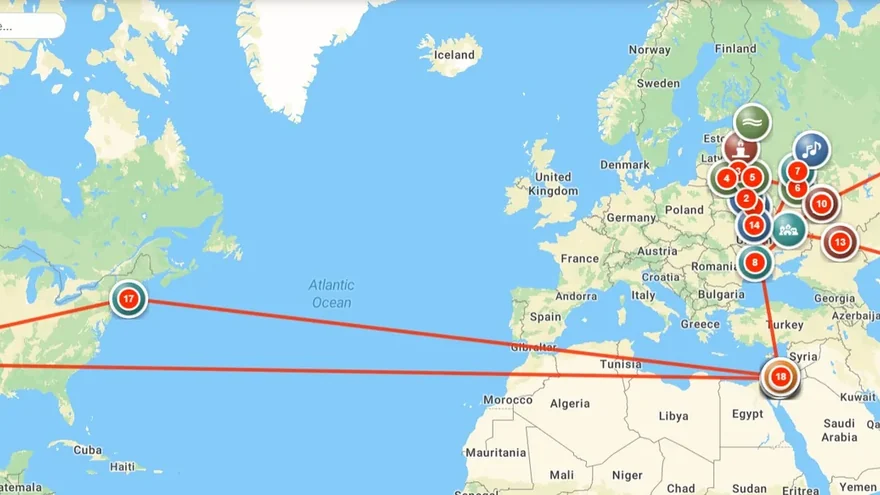
Above: the opening screen of the first Family Story Map, built from one family’s memoir — four branches, from Bobruisk and Vitebsk through Tambov, the Urals and Odessa to Rehovot and Jerusalem. Each reader picks their own language and enters the story. Shown with the family’s permission; the map itself is private.
Built from a single memoir written by one grandmother. Every place verified, every photograph from the family’s own archive.
What the family sees

The whole journey as one path. One tap numbers the stops in the order they happened, from Belarus and Lithuania through Russia and Ukraine down to Israel. The regions along the bottom filter the map to one chapter at a time.

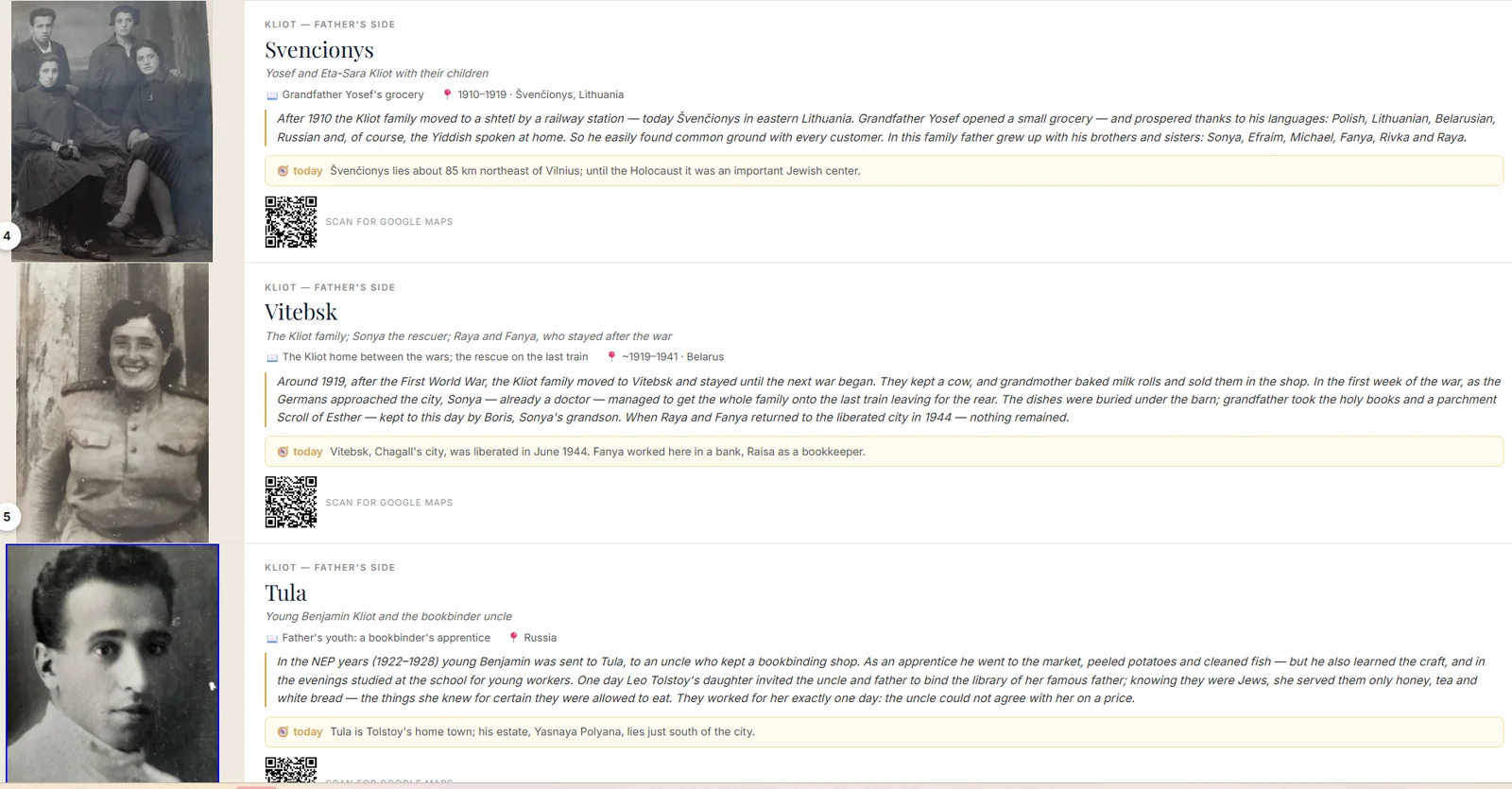
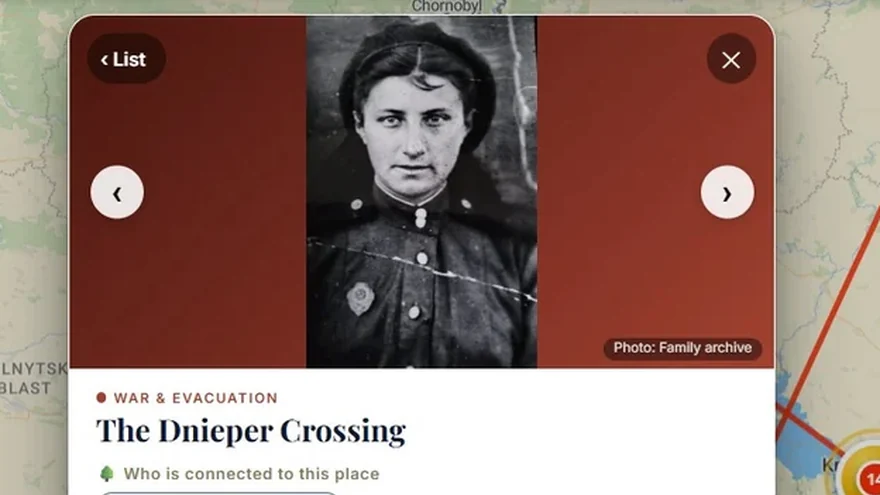
Open a place and the story is waiting. The archive photograph, who in the family is connected to it — tap the name and the tree opens on that person — the passage from the memoir in the writer’s own words, and a line on what stands there today. Nothing paraphrased, nothing invented. Every place is listed down the side with its own portrait, branch and dates, and any of them can be bookmarked into a personal selection.

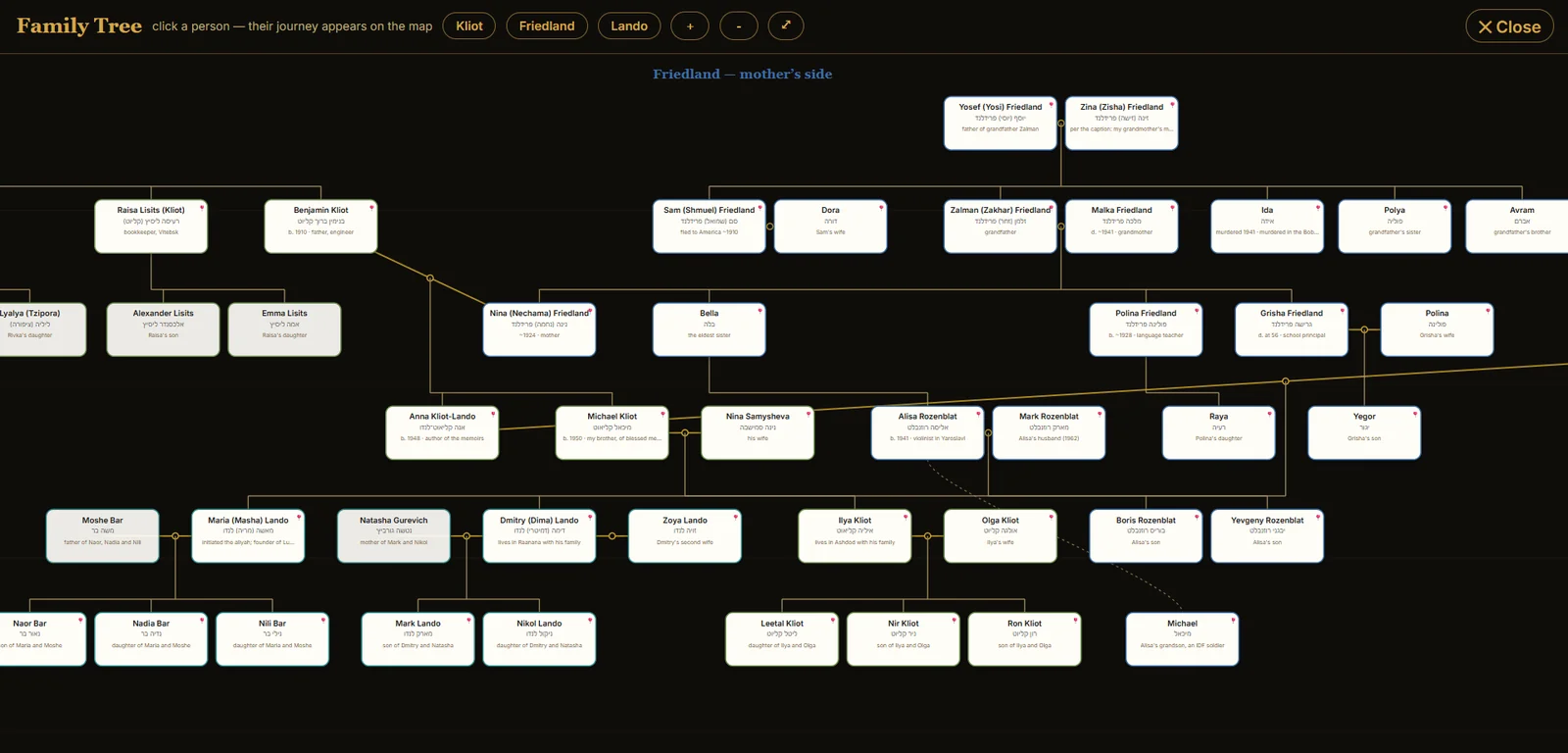
A family tree wired into the map. Generations of three branches, every name carried in all three languages. Click a person and their journey draws itself on the map — the pin on each card is the link between the two.

And it prints as a book. Any selection of places exports to a PDF laid out place by place — the photograph, the story in the family’s own words, and a QR code that opens the location on a map. One to keep on the shelf, one to hand to a relative who will never open a link.
Why a map, and not another document
The house, the shtetl, the factory, the camp, the first apartment in a new country. We find the historic address, place it accurately, and attach the photograph and the passage of the story that belongs there.
A century of displacement is hard to hold in your head and obvious on a map. One tap draws the whole route — or one person’s route — in the order it actually happened.
The photographs are yours. Where a family photograph does not exist, we use properly licensed historic or public-domain images of the place, and we credit every one.
Grandparents read it in the language they grew up in, grandchildren in the one they were born into. The same link adapts to the reader — we produce every language.
Not a separate diagram. Tap a person on the family tree and the map draws their life; tap a place and see who was there.
Every place and every quotation comes from the family’s own material and verified sources. Where the record is uncertain, the map says so rather than filling the gap.
Who it’s for
A milestone birthday, an anniversary, a wedding, a reunion. A gift that the whole family opens on one link and keeps.
You have already done the research. We turn it into the thing people will actually read.
A visual, shareable layer on top of the records you already hold, in every language your users read.
Map a whole community’s migration, not just one family — where people came from, where they scattered, where they rebuilt.
How it works
A memoir, an interview recording, a tree file, a shoebox of photographs, or just a list of names and towns. Anything is a starting point.
We find each place as it exists today, including towns that were renamed or borders that moved, and check every one against the record.
Your map goes live on a private link, in every language your family reads, with the tree, the path and the photographs in place.
Families keep remembering. Send a new photo or a new story any time and we add it — it appears everywhere, in every language.
A family story is not a publication. Every map is delivered on an unlisted link, hidden from search engines, and shared only by you — with the whole family, or with two people. We never publish a family’s map, quote it, or use it as a public example without written permission. If you would rather it were public, that is your decision to make, not ours.
Send us roughly what you have and how far back it goes. We will come back within one business day with what a map of it could look like, and what it would cost.
We will be in touch within one business day.